
Overland Park History Overview
the story of overland park
Overland Park’s story is one of vision, opportunity, and extraordinary change. From the people who first called this land home to the city that emerged in just a few generations, every era has left its mark.
The Overland Park Historical Society invites you to delve into the stories at Discover O.P. and through the programs it offers and here on the website.
Click here for a collection of posts about various aspects of Overland Park’s history.
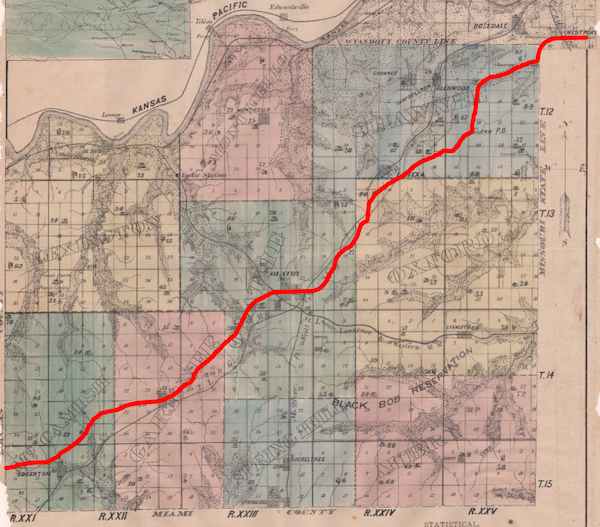
Long before there was an Overland Park
Northeastern Kansas was home to Native peoples, including members of the Shawnee, Cherokee, Delaware, Wyandot, Ottawa, Wea, Miami, Pottawatomie, Chippewa, Quapaw, Osage, Kickapoo, and Kansa tribes.
In the 1800s, trails and roads began connecting this prairie to places far beyond it. The Santa Fe Trail carried travelers and commerce westward, while a military road crossed the area. Their paths helped establish a crossroads in what is now Downtown Overland Park.
Discover the stories of the people, trails, and places that came before Overland Park at Discover O.P.
A vision takes root
In 1903, William B. Strang Jr. came to Kansas City and saw something others had overlooked: the potential for a new kind of community in the countryside south and west of the city on the Kansas side of the state line.
Strang began acquiring land, laying out subdivisions, planting thousands of trees, and creating a “park-like” setting where families could enjoy country living without giving up access to Kansas City.
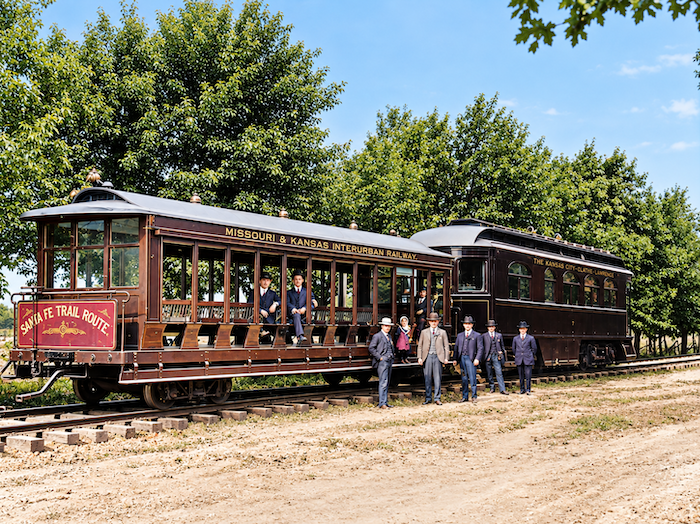
His vision depended on transportation, so he built the Missouri-Kansas Railroad, which became known as the Strang Line, an interurban railway that connected his developing community to Kansas City. Strang also created recreational attractions and an airfield, drawing people to an area that had once been considered too remote for development.
After Strang’s death in 1921, growth continued—but modestly. The Strang Line remained an important link until it ceased operations in 1940.
Meet the visionary who gave Overland Park its name—and explore the community he built at Discover O.P.
From Wartime Community to Suburban Boom
World War II changed Overland Park and the surrounding region. New jobs, new industries, and new families transformed what had been a largely rural community.
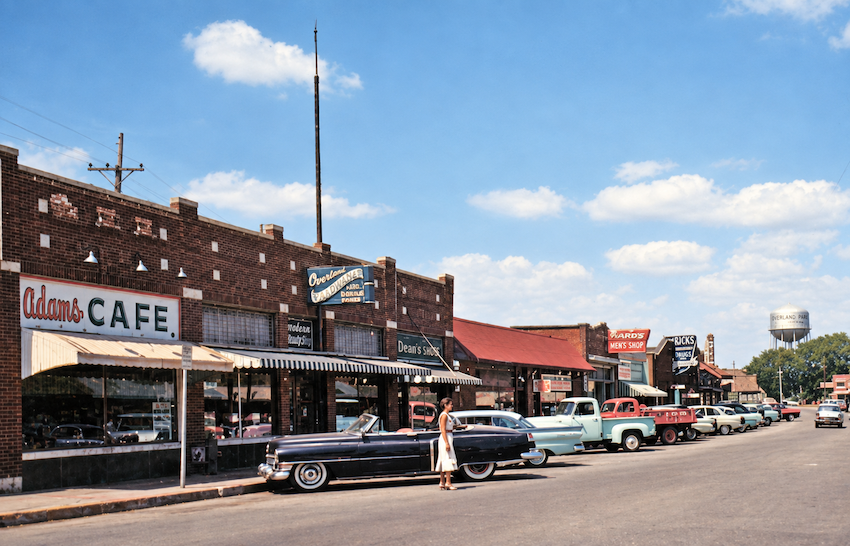
Then came the postwar boom. People were looking for homes, space, good neighborhoods—and excellent schools. The growth of the Shawnee Mission school system became an important part of the appeal of Northeast Johnson County, helping attract families and shaping the communities that grew around them.
Neighborhoods multiplied. Schools, churches, businesses, and new roads followed. What had once been countryside was becoming a thriving suburban community.
The pace of change was accelerating—and soon, residents would decide that their growing community needed a city government of its own.
See how war, families, schools, and suburban growth changed the landscape of Overland Park at Discover O.P.
A city takes shape
On May 20, 1960, Overland Park officially became a city with 28,085 residents. What followed was one of the most remarkable periods of growth in the community’s history.
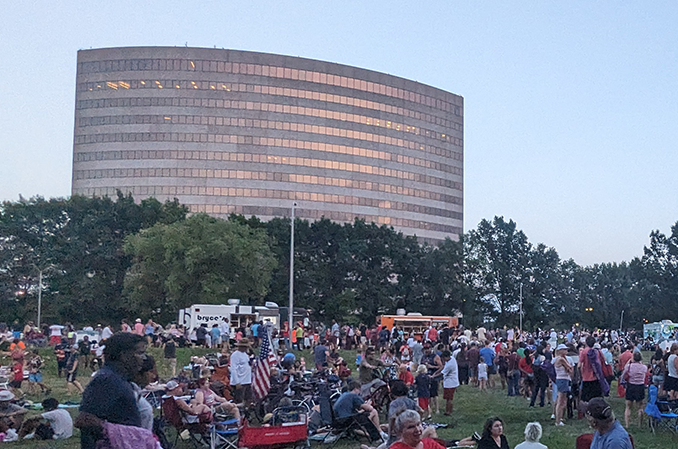
New neighborhoods spread across the area. Shopping centers, businesses, schools, parks, restaurants, and entertainment destinations transformed the city. Metcalf South, Corporate Woods, Oak Park Mall, Deanna Rose Children’s Farmstead, and development far beyond College Blvd. became part of a rapidly changing landscape.
By 1988, the population had surpassed 100,000. Growth continued through the 1990s and into the new century, while community leaders increasingly looked not only at how Overland Park was growing, but at what kind of city it should become. Today, more than 200,000 people call Overland Park home. Yet the story is still being written.
Explore the people, places, and decisions that shaped the Overland Park we know today, and imagine what comes next at Discover O.P.